“To truly include women means to openly embrace their diversity of race, age, ability, faith, body image, and how they identify. Worldwide, women must be included in all fields of endeavour.” Source: (https://www.internationalwomensday.com/Theme)
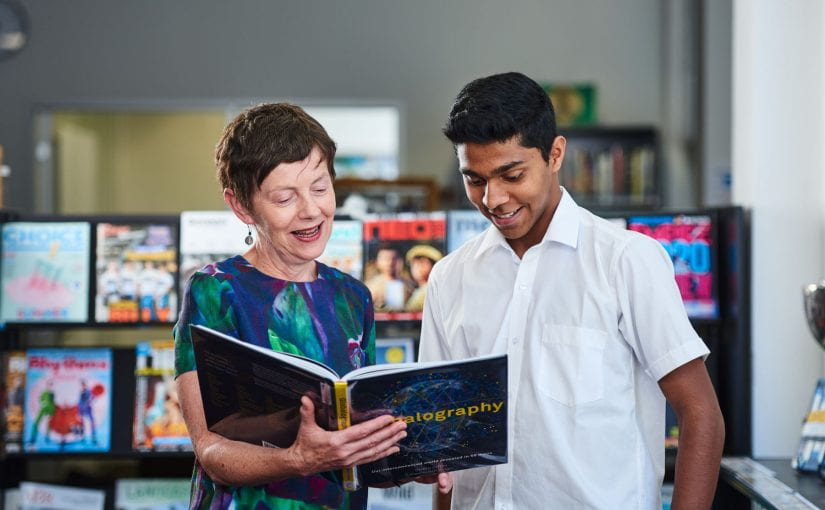
Where can we find a more inclusive space but in a library? School libraries across Australia are spaces where all members of the school community are welcomed – regardless of language, ability, culture or gender. Explore the below resources to honour and spotlight women on International Women’s Day and all year round.
Share some of the amazing online resources that other libraries have created about women and their roles throughout history. Plenty of libraries have created great free resources to share with your school community.
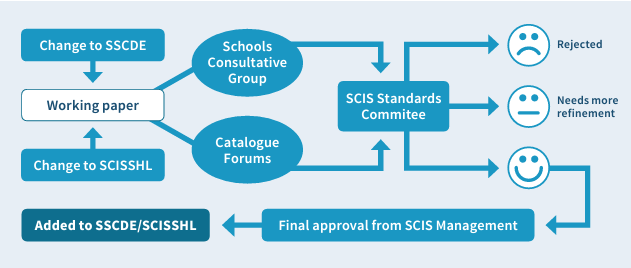
Additions to the SCIS subject headings are made through a detailed process of consultation to ensure they are as appropriate as possible.
The lifecycle of a new heading begins with an idea. Suggestions for new headings can come from teachers or librarians in schools, from changes in the curriculum or from cataloguers. They can be prompted by technological change, social change or changes in accepted terminology or language.
Once a new heading is proposed, the first step is to write a working paper. This starts with a detailed rationale for the new or changed heading. We count the number of records in the SCIS database that use the term to determine how common it is and provide a dictionary definition for clarity.
The structure of the new heading is laid out: ‘Broader terms’ and ‘Narrower terms’ are identified and ‘Use for’ references are indicated, where appropriate. The heading may also include a clarifying scope note.
The working paper will then detail the existing reference structure in the SCIS thesaurus and determine how the new term would be integrated.
The completed working paper then starts its rounds of consultation. Papers are discussed at SCIS cataloguer meetings in Victoria and New South Wales. Once any suggested changes have been made, the papers are discussed at meetings of external cataloguers who contribute to the SCIS database. Papers are also assessed by a group of school librarians and teachers.
When all stakeholders have been consulted, the opinions of each group are collated and presented at a quarterly meeting of the SCIS Standards Committee, made up of representatives from each team that contributes to SCIS. Each paper is presented and discussed in detail, and then voted on for inclusion in the database. If the paper is accepted, the new term will be added. If the paper is rejected, it may be revised and presented again at a later date, or rejected as unnecessary. Papers may go through several iterations before the new heading is finally accepted for inclusion.
Example of a new SCIS subject heading
Key
BT – Broader term
NT – Narrower term
RT – Related term
UF – Use for
SN – Scope note
SEN – Special example note
In – Indexing note
Heading
Sleepovers
SN Use for works about school-age or younger children sleeping over at another person’s home.
UF Sleep overs
UF Sleep-overs
UF Slumber parties
BT Sleep
RT Bedtime
RT Amusements
RT Children’s parties
Find out about new subject headings recently added to SCIS:
In the immersive world of interactive fiction, players command the story by inputting text to guide characters and explore rich narrative landscapes. Dubbed text adventures, these non-linear tales allow you to carve your own path through intricate choose-your-own-adventure stories online.
Excitingly, SCIS cataloguers have meticulously created records for 35 free interactive fiction titles, complete with URLs for direct, seamless access to these resources straight from your library catalogue.
Free Interactive Fiction Titles
SCIS NUMBER
TITLE
5473019
Lost Pig
5473026
Suveh Nux
5473033
Inside the Facility
5473370
To Hell in a Hamper
5473371
The Wand
5473514
The Shadow in the Cathedral
5473381
Six
5473382
Aotearoa
5473385
Illuminismo Iniziato
5473386
Risorgimiento Represso
5473390
The Temple of Shorgil
5473539
Grandma Bethlinda’s Variety Box
5473538
Skies Above
5473541
A Bear’s Night Out
5473543
Winter Wonderland
5473392
Ether
5473520
Snack Time!
5473524
Best Gopher Ever
5473396
Untold Riches
5473401
Earth and Sky
5473402
Another earth, another sky
5473550
Pirate’s Plunder!
5473556
Mrs. Pepper’s Nasty Secret
5473574
The Prongleman Job
5473576
The Legend of the Missing Hat
5473579
The Blue Lettuce
5473403
The Lost Islands of Alabaz
5473585
It
5473642
Reflections
5473644
Baking with Lizzie
5473494
Dragon Adventure
5473646
And a Hippo New Year
5473649
Grandpa’s Ranch
5473495
A matter of Heist Urgency
5473496
Bureaucrocy
How to batch import the records into your library system
People’s Republic of Interactive Fiction http://pr-if.org/ (Warning – No SSL certificate, be careful not to share any personal information on the site.)
We’re eager to gather feedback on how interactive fiction has impacted students in schools. Your insights are crucial for SCIS as we contemplate the future of this project and consider adding more titles. Email your feedback to help@scisdata.com.
In today’s educational landscape, nurturing inclusivity in schools is of increasing importance. At SCIS, we’re deeply committed to fostering diversity and respect within the educational community, and we have recently taken a significant step in this direction by enhancing SCIS Authority Files.
We have now integrated AustLang terms into SCIS Authority Files. AustLang is an extensive Aboriginal and Torres Strait Islander language database that utilises the Australian Institute of Aboriginal and Torres Strait Islander Studies (AIATSIS) catalogue of language terms.
SCIS Authority Files play a central role in supporting learning and exploration through library catalogue searches, providing ‘see’ and ‘see also’ results to help users find the information they need.
Why is this development so crucial? The inclusion of AustLang terms means that school communities will see search results categorised by terms that appropriately name Australian languages, helping them understand how to respectfully refer to the resources they are looking for.
For educators, it offers a valuable resource, in line with the Australian Curriculum v.9, to help teach the importance of cultural diversity and respect to their students. It also encourages teachers to incorporate Aboriginal and Torres Strait Islander terms in their teaching, embedding a deeper understanding of Australia’s diverse culture into education.
Over 5000 schools across Australia use SCIS Authority Files. AustLang headings are now available to subscribing schools through our September Authority Files release. This update can be downloaded via our website, or automatically imported through our API for Accessit, Oliver and Athenaeum users.
If you don’t currently subscribe to SCIS Authority Files, you can contact our friendly customer service team at help@scisdata.com for more information. You can also sign up for our FREE March 2024 webinar to find out more about what SCIS Authority Files are, and how they can benefit your school library:
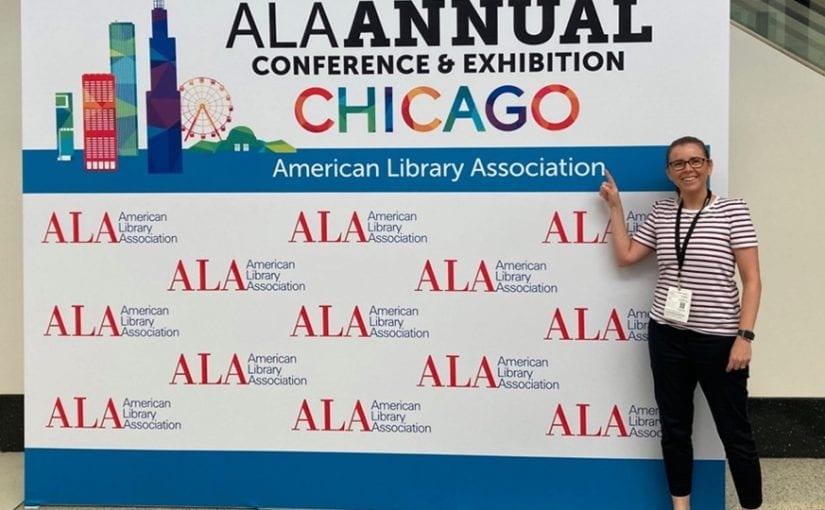
As a teacher librarian in a diverse school community, I am acutely aware that my worldview has been shaped by my upbringing in country South Australia. In June 2023, I had the opportunity to further my worldview by attending and presenting at the American Library Association Annual Conference in Chicago. The experience of meeting with 20,000 librarians from across the world was humbling. As we discussed our joys and challenges, there were many similarities. I felt while I was geographically outside my comfort zone, I was professionally in a familiar place.
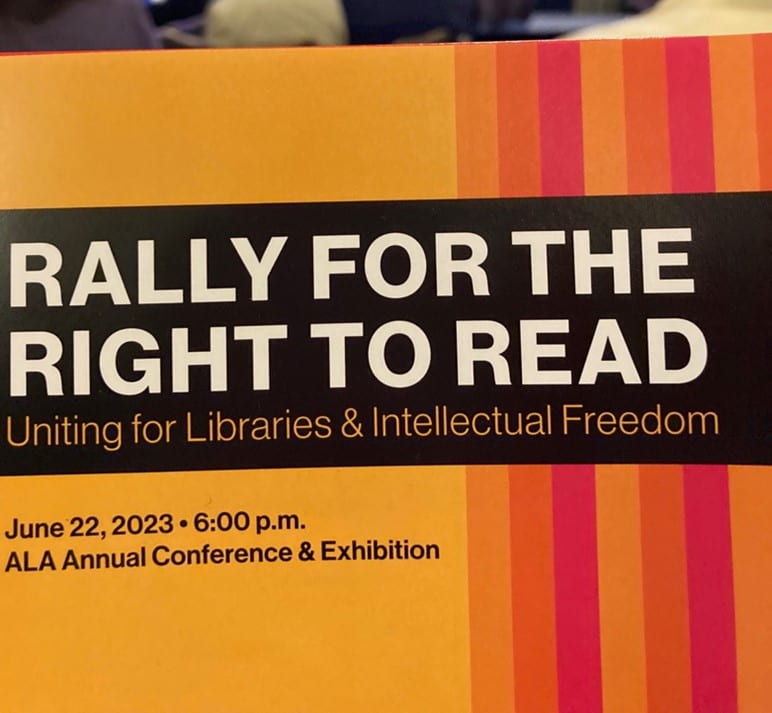
A sign advertising the ‘Rally for the right to read’.
One of the most interesting parts of my trip was my exposure to the book challenges and bans currently being experienced in schools and public libraries across the United States. On my first night in Chicago, I attended ‘A Rally for the Right to Read’. The title was not hyperbole; the right to read freely and widely in much of the US is at risk. The keynote was delivered by Dr Ibram X Kendi, Professor in Humanities at Boston University and the author of How to be an Antiracist, one of the most banned texts in school districts in 2021–22. However, this was not the most transformative moment for me – this moment came when a panel of school librarians and a rural mum/graduate student spoke. Jamie Gregory was the 2022 South Carolina School Librarian of the Year, an accolade which in turn brought undue attention to a simple tweet in support of a book, which then led to a tirade of online and offline abuse.
Becky Calzada is the District Library Coordinator in Leander ISD; her district was one of the first to experience the full brunt of book challenges, a title she is not proud of. She has taken it upon herself to guide others and even spoke to this little Australian, delivering valuable advice. In her words, ‘It starts with one book!’ and ‘Don’t give them to airtime they desire.’ The final panel member was Leila Green Little, a rural mum and graduate student in library studies who, along with six friends, have become plaintiffs in a federal lawsuit against her county, which has resulted in a preliminary injunction requiring the return of books to the shelves of the public library. The case is ongoing, as is the fight against book bans.
Senior Library at the University of Chicago Lab School
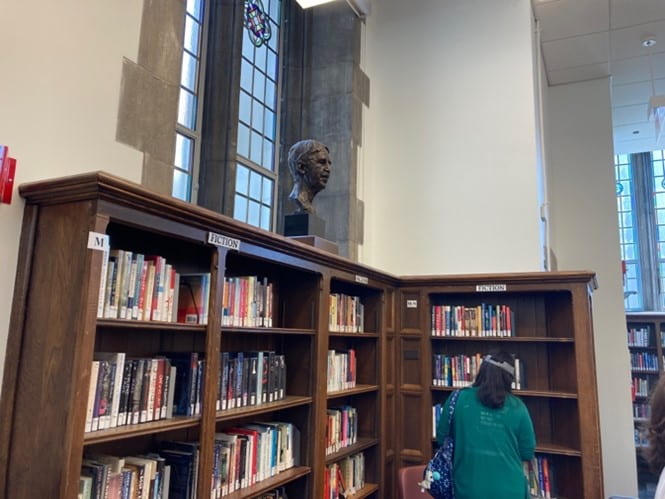
The following day I joined a Chicago School Library Tour with school librarians from the US, Singapore, Kenya and Peru. We visited school libraries serving different communities, with various designs and programs, but one quality was similar: the passion of the staff that work within them. At University of Chicago Lab School, one of the most interesting parts was exploring the Senior Library, replete with old wooden shelves and stained-glass windows. There was even a room dedicated to books published by graduates of the school. In contrast, the Catherine Cook School was a vertical school built in an old shoe factory. The furniture and programs were modern, the playground was on the roof, but the staff had the same dedication to literacy we share as professionals across the world. We finished the day with a keynote message from Judy Blume who, in keeping with what seems to be an ongoing theme, has over the years also had her books banned. She delighted the audience with a passion for ensuring teenagers access books which represent real problems.
After the joy of observing the practice of others, the next morning it was my turn to share. I presented on ‘Finding a New Normal: Library Policies and Practices’, sharing the pivots we took as a school library during the pandemic and the enduring legacy of these changes. I shared that many opportunities had opened up for invigorated programs and practices, but the pandemic also unearthed inequities within our services. No longer will we assume equal access to books and online resources in the homes of our students.
I spent the rest of the conference attending presentations and workshops on topics as diverse as supporting social development with literature, cataloguing, digital literacy and community connections.
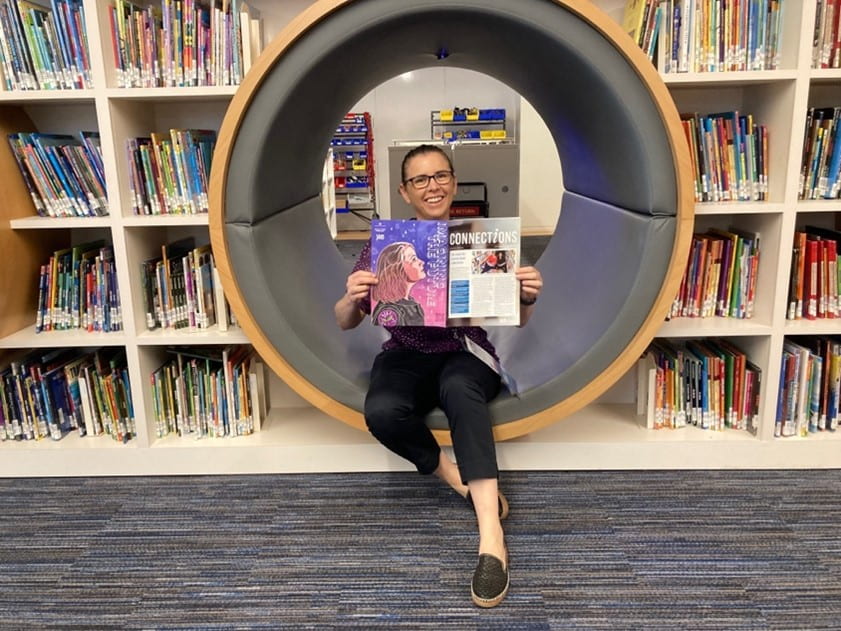
Catherine sharing SCIS’s Connections magazine at Francis W Parker School in Chicago
There were many highlights of my trip, presentations on the breadth of library topics, meeting the Librarian of Congress, Rick Riordan, and even visiting the Field Museum. I left the conference and the country with a suitcase full of new release books from publishers, along with a box mailed home, but also a toolbox of knowledge and experiences I can draw upon for my career. If you ever have the opportunity to attend an international conference, I encourage you to seize it. Our practice is not a solo act – we are better when we draw on the knowledge and experiences of others, and a global worldview can only enrich this further.
Accessit users can now automatically import Authority Files into their library management system via our API. This new feature saves time for library staff who no longer need to manually import the files.
Authority Files enhance your catalogue records by incorporating “see” and “see also” references. These references serve as a helpful tool for you and your school community, facilitating easier discovery of relevant resources. It’s like adding an intuitive search assistant to your catalogue!
Our team of expert cataloguers create name, subject, and series linkages, thereby broadening your search results to encompass resources that may not directly match your search term but are still relevant. For instance, when searching for “Stars,” you might also come across resources related to Astrophysics, Nebulae, Planets and Solar Systems . This expanded search experience empowers your school community to find more specific or related resources on the topics they search for.
If you’re an Authority Files subscriber and already use the SCIS API, setting up the new automatic import is straightforward. See the instructions below:
Navigate to Cataloguing -> Imports -> Import MARC Authorities
Select option ‘Import from SCIS API’
Select ‘Authority Type’ – (Subject / Name / Series)
Click ‘Start Import’
If you don’t yet use the SCIS API with Accessit, contact Accessit customer support for assistance setting it up and activating the automatic import.
Once the setup is complete, manual imports become a thing of the past, allowing you to enjoy the benefits of Authority Files effortlessly. In Accessit, these benefits are immediately evident in the ‘See Also’ tab of your search display, as depicted in the screenshot below:
We’re thrilled to offer Accessit users the opportunity to enhance their catalogues with our automatic Authority Files import! If you’re an Accessit user and an Authority Files subscriber, we highly recommend setting up the automatic import today. SCIS extends its gratitude to Accessit for working with us to implement this feature, which helps simplify library management.
Don’t subscribe to our Authority Files yet? No problem! Our friendly customer service team is here to help. Contact us at help@scisdata.com or any of the phone numbers listed on our website to learn more about the benefits and how to get started.
Authority Files enhance your catalogue records by creating “see” and “see also” references, helping you and your school community discover relevant resources. Think of it as making your catalogue smarter!
Our expert cataloguers create name, subject, and series reference linkages that extend your search results to include resources that may not directly match your search term, but are still relevant (E.g. “Disasters” will also show you Shipwrecks or Disaster Relief so you can find more specific or related resources). This creates a “rich” search experience and provides easier access to the resources you’ve carefully curated to aid learning and development.
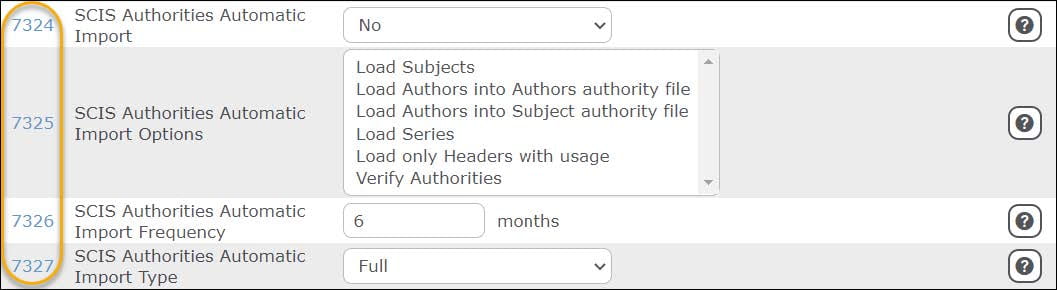
Oliver V5 users can set up the SCIS API to import Authority Files automatically using parameters 7324 -7327 to set up the import. See below information:
7324, ‘SCIS Authorities Automatic Import’,enables the new automatic import.
7325, ‘SCIS Authorities Automatic Import Options’,the same options as available when manually importing a MARC Authority file.
7326, ‘SCIS Authorities Automatic Import Frequency’, how often the process is run as part of nightly housekeeping. This defaults to every 6 months.
7327, ‘SCISAuthorities Automatic Import Type’, the same options as available when manually importing a MARC Authority file.
In addition to the new parameters, two existing parameters (7320 and 7321) are also used for this functionality:
7320, ‘SCIS Username’,available from SCIS for use with their API.
7321, ‘SCIS Password’,available from SCIS for use with their API.
If you need help completing the process, you can contact Softlink at support@softlinkint.com.
Once set up, there will be no need to import manually, and you can simply enjoy the benefits of Authority Files through features like Oliver’s cataloguer display. This display provides clickable links to broader, narrower, and related terms, as well as series references. See the example screenshot below:
We’re excited that Oliver V5 users will now be able to enrich their catalogues through Authority Files without needing to lift a finger! If you’re an Oliver V5 user and Authority Files subscriber, we highly recommend setting up automatic Authority Files import today. SCIS would like to thank Softlink for implementing this new feature, making library management easier.
Don’t subscribe to our Authority Files yet? No problem! Our friendly customer service team is here to help. Contact us at help@scisdata.com or any of the phone numbers listed on our website to learn more about the benefits and how to get started.
Education is an important part of reconciliation. Making sure your school community has access to resources that can help them learn about our shared culture and history supports and strengthens our ability to build a better community for all Australians.
To help you expand your library collection to include more new resources about and by First Nations people, here are six resources we’ve catalogued over the last year.
Law is culture, and culture is law. Given by the ancestors and cultivated over millennia, Indigenous law defines what it is to be human. Complex and evolving, law holds the keys to creating resilient, caring communities and a life in balance with nature.
Marcia Langton and Aaron Corn show how Indigenous law has enabled people to survive and thrive in Australia for more than 2,000 generations. Nurturing people and places, law is the foundation of all Indigenous societies in Australia, giving them the tools to respond and adapt to major environmental and social changes. But law is not a thing of the past. These living, sophisticated systems are as powerful now as they have ever been, if not more so.
Country tells us when …
Tsheena Cooper, Mary Dann, Dalisa Pigram-Ross & Sheree Ford ; translation by the Mabu Yawuru Ngan-Language Centre
Some cultures around the world have four seasons that they look out for on a calendar; summer, autumn, winter and spring. The Yawuru mob don’t have four seasons that are told through a calendar. They have six seasons and Country tells the Yawuru people when they have arrived by what can be felt, seen, tasted, smelled and heard.
The Voice to Parliament Handbook: All the detail you need
Thomas Mayo & Kerry O’Brien, cartoons by Cathy Wilcox
Indigenous leader Thomas Mayo and acclaimed journalist Kerry O’Brien have written this handbook to answer the most commonly asked questions about why the Voice should be enshrined in the Australian Constitution, and how it might function to improve policies affecting Indigenous communities and genuinely close the gap on inequalities at the most basic level of human dignity.
Looking after Country with fire: Aboriginal burning knowledge with Uncle Kuu
Victor Steffensen, illustrations by Sandra Steffensen
Join Uncle Kuu as he takes us out on Country and explains cultural burning. A timely story of understanding Australia’s ecosystems through Indigenous fire management, and a respectful way forward for future generations to help manage our landscapes.
‘History is not weighted on the scales, it is felt in our bones. It is worn on our skin. It is scarred in memory. ‘The Queen reigned for seventy years. She came to the throne at the height of Empire and died with the world at a tipping point.’
What comes next after the death of what Stan Grant calls ‘the last white Queen’? From one of our most respected and award-winning journalists, Stan Grant, The Queen is Dead is a searing, viscerally powerful, emotionally unstoppable, pull-no-punches book on the bitter legacy of colonialism for Indigenous people.
William Cooper’s passionate struggle against the dispossession of Aboriginal people and the denial of their rights, and his heroic fight for them to become citizens in their own country, has been widely commemorated and celebrated. By carefully reconstructing the historical losses his people suffered and endured, this book reveals how the first 70 years of Cooper’s life inspired the remarkable political work he undertook in the 1930s.
“‘It is not likely that many women will become the heads of libraries; they are handicapped by various limitations; limitations perhaps of physical strength, perhaps of temperament. Still, there are only these limitations to prevent them from aspiring to the highest positions in the state, and no doubt one or two women will eventually hold such positions. ‘Nine out of every ten women are unfitted [sic] to be at the head of a library,’ remarked Mr Anderson, the Government Librarian, ‘but sometimes a tenth is discovered, and she is beyond price.'”2]
If we’re making up statistics, I’d hazard a guess that slightly more than a tenth of women librarians are ‘beyond price’. They’ve endlessly inspired and helped people throughout history, both in real life and in the media.
Every now and then, we find a cool article on social media about the awesome librarians in films – those tweed-and-cardigan-wearing, mild-mannered, rule-abiding superheroes who hold the key to solving the mystery.
So, in celebration of this year’s International Women’s Day, we’d like to pay homage [give a shout-out] to the well-known – and lesser-known – librarians in literature, paragons of the art of librarianship – some of our favourite literary characters who are not only ambassadors for the profession, but for all women.
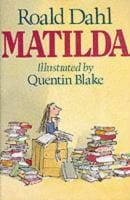
Mrs Phelps, in Matilda, by Roald Dahl
SCIS no. 425299
Notwithstanding the current Dahl controversy, Matilda remains a perennial favourite with children and adults alike. And everyone remembers Miss Honey, right? That teacher every teacher wants to be, and every child wishes they had? But really, we should be remembering the librarian from Matilda – the woman who guided, curated and supplied Matilda’s fundamental education! Mrs Phelps is the one who equipped Matilda for the challenges ahead.
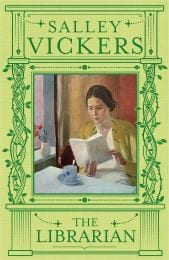
Sylvia Blackwell, in The Librarian, by Salley Vickers
Sylvia Blackwell is the unfussy, calm and efficient – yet burningly passionate – children’s librarian in a small town in 1950’s England. She’s an inspiration to the townspeople and indeed to all those who aspire to cardigans, efficiency and imparting a love of reading. Sylvia Blackwell (named by the author after her own favourite librarian) is flawed, human and inspirational, and her legacy long outlasts her lifetime.
Reine-Marie Gamache, in the Inspector Gamache series, by Louise Penny
Have you heard of Three Pines? Ostensibly a cosy murder mystery series set in Québec and starring the indefatigable Inspector Gamache. However, the heart and soul of this story rests with his wife, Reine-Marie. Reine-Marie is librarian goals: the epitome of calm, intelligence, wit and good sense.
Irene Winters, in The Invisible Library series, by Genevieve Cogman
Irene Winters is a steampunk heroine – part spy, part thief, and wholly capable. She represents the tough, intelligent, librarian-as-all-rounder trope. Irene resides in a realm where parallel worlds exist, librarians represent order, fairies represent chaos, and books are very powerful. If I lived there, I’d want Irene on my side, that’s for sure.
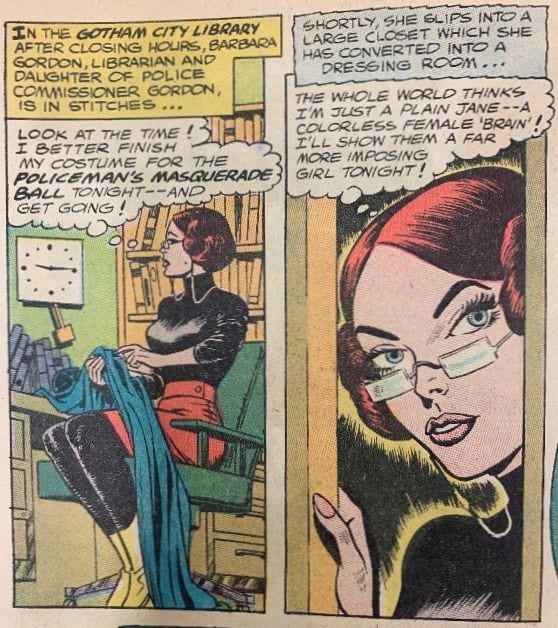
Batgirl (aka Dr Barbara Gordon), in the Batgirl series
‘In the Gotham City Library….’ Detective Comics no. 359, (January 1967) https://blogs.loc.gov/headlinesandheroes/2019/07/lets-talk-comics-librarians/
Not only does she fight crime, the daughter of Inspector Gordon also has a PhD in Library Science and runs the Gotham City Public Library. The comics do embrace the library cliché though – imagine calling the world of the library ‘mundane’! – but Batgirl teaches us that women are resourceful and that appearances can be deceiving.
We hope you’ve enjoyed reading about these fantastic female librarians in literature. You can find Catalogue Records for all the titles mentioned on our database.
By Ceinwen Jones, Cataloguing Team Leader, Schools Catalogue Information Service (SCIS)
A subscription to the SCIS database provides much more than bibliographic records for school libraries. With access to more than 1.6 million bibliographic records, the database is also a means of support for teachers, providing a valuable view of curriculum resources.
At present, there is an increasingly overwhelming number of print and digital curriculum resources available for teachers. However, due to their heavy workloads, teachers are finding that they do not have time, or the expertise, to find specific resources relevant to their needs. Because of this, it is becoming more important for teacher librarians to search and analyse content efficiently in order to support teachers and provide them with access to a wide range of resources. This is where access to the SCIS database can help.
When I was in a school library, I established a Current Awareness service for teachers, using information from what was then the Victorian Education Department’s Central Cataloguing service. This was done on a very small scale. I began by contacting teachers at the school, asking if they would like to have information about available resources for their curriculum planning. This information was accessed mainly from bibliographic records in the Central Cataloguing service. Teachers were notified monthly, using printed lists, and were then able to use the resources already in the school library or to request that additional resources be purchased.
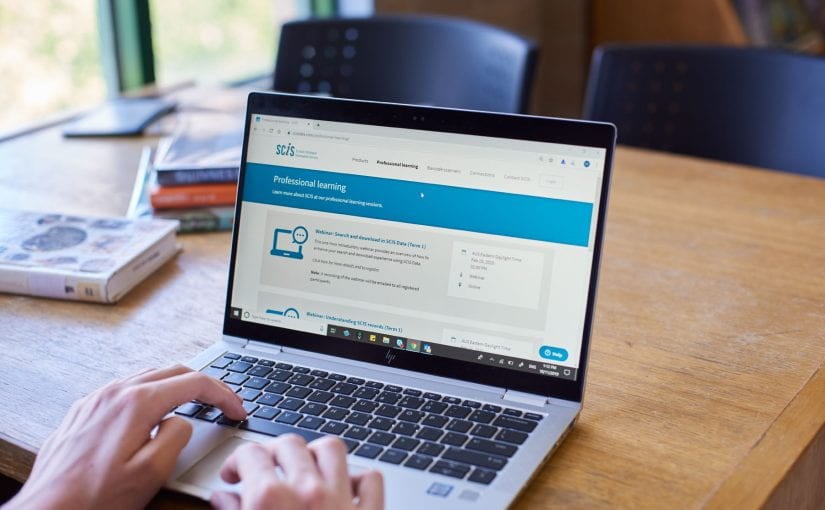
Today, using the SCIS database makes a ‘Current Awareness’ service much easier, both for teacher librarians and teachers. For example, teachers could complete an online form, detailing their curriculum areas of interest, as well as other relevant information, such as resources for professional development. The teacher librarian, or other library staff, then do an advanced search of the SCIS database for bibliographic records of relevant recent resources. This search would include learning area, subject headings, year level, print and digital resources, as well as fiction and nonfiction resources. The summaries in the bibliographic records can also be very useful for resource selection.
In addition, URLs are included for websites and apps, so that staff can click through to a website or app from its catalogue record. Here are some examples of how SCIS records can be used in a Current Awareness service.
The SCIS database, with its curated collection of more than 1.6 million bibliographic records, gives teachers and teacher librarians access to view resources to use for planning curriculum content, planning projects and professional development. For example, the ClickView digital video library features more than 13,500 videos; the Wheelers ePlatform has ebook and audiobook records, fiction and nonfiction, for Australian, New Zealand and UK schools at both primary and secondary level; and there are records from the National Library of New Zealand. There are also records, for secondary level, from Massolit.
The SCIS database is also very useful for primary school teachers who wish to select class sets of reading materials. A search by the subject headings ‘Reading materials’ and ‘Levelled readers’, and by publisher, such as Sunshine Books and Decodable Readers Australia, will provide access to view a large range of up-to-date print and digital resources.
The SCIS database can also be used as a buying tool or resource selection tool for teachers, as well as teacher librarians. When a search of the database is completed and a list of resources is produced, the teacher will then be able to request these resources to be purchased for use in the library or classroom, and can download the SCIS records for these resources in anticipation of their arrival.
By being proactive, initiating current awareness, and producing specifically curated lists from the SCIS database, school librarians can enhance the efficiency and impact of their collection development practices.




 Notwithstanding the current Dahl controversy, Matilda remains a perennial favourite with children and adults alike. And everyone remembers Miss Honey, right? That teacher every teacher wants to be, and every child wishes they had? But really, we should be remembering the librarian from Matilda – the woman who guided, curated and supplied Matilda’s fundamental education! Mrs Phelps is the one who equipped Matilda for the challenges ahead.
 Sylvia Blackwell is the unfussy, calm and efficient – yet burningly passionate – children’s librarian in a small town in 1950’s England. She’s an inspiration to the townspeople and indeed to all those who aspire to cardigans, efficiency and imparting a love of reading. Sylvia Blackwell (named by the author after her own favourite librarian) is flawed, human and inspirational, and her legacy long outlasts her lifetime.
 Have you heard of Three Pines? Ostensibly a cosy murder mystery series set in Québec and starring the indefatigable Inspector Gamache. However, the heart and soul of this story rests with his wife, Reine-Marie. Reine-Marie is librarian goals: the epitome of calm, intelligence, wit and good sense.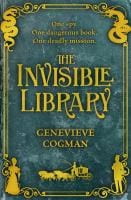
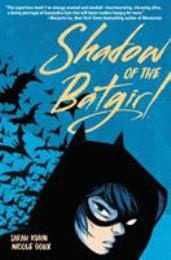 Not only does she fight crime, the daughter of Inspector Gordon also has a PhD in Library Science and runs the Gotham City Public Library. The comics do embrace the library cliché though – imagine calling the world of the library ‘mundane’! – but Batgirl teaches us that women are resourceful and that appearances can be deceiving.