
Starting off the year right: task list and resources for those new to SCIS and the school library

Librarian leaning out from behind shelves whilst making a gesture that indicates he has an idea, he looks happy

Are you new to the library? Or perhaps you’re experienced, but quite like a checklist?! SCIS has your back…here’s an overview of the types of tasks that need attention at the beginning of the year – and for more detail, you can download the check list, resource links and access a free webinar recording.

☑️Administrative system setup

First things first – you need to know how to work that computer. Give yourself a bit of time to familiarise yourself with the library management system – how to do loans and returns and so on – and also ensure your borrower records are up to date. Your particular library managment system will have instructions on how to do all of these things, so check on their website for more detail.

☑️Collection and catalogue

Make sure everything is orderly, documented and findable: weed old or damaged resources, process any new resources and check you know what digital subscriptions your users have access to – if any.

☑️Library space

Make sure everything is organised to your liking and that you have all the equipment and signage you may need. Think about what kinds of displays you’d like to have over the year and set up the first one to welcome users back to the library.

☑️Teaching and learning

Whether you are responsible for delivering library lessons or not, you may like to think of some orientation and engagement activities for your users to do when they come in to borrow – things like a scavenger hunt or a suggestion box for new resources can be useful for both the students and for you!

You’ll probably want to think about policies too – in practical everyday terms, things such as loan periods, and whether you charge fines for overdue items; but also, possibly, for aquisitions and challenged materials.

Lastly, checking in with teachers so you can align library purchases and support with curriculum is a great first step to making the library visible and valued by staff.

☑️Communication and advocacy

Advocating for the library is the fun part – all it is is letting people know all the great things you do every day! Send a welcome message advertising the opening hours and introducing library staff. Highlight new services and resources on school platforms like the newsletter, or at assemblies and staff meetings. Think about whether you’d benefit from the help of volunteers – and how you’d use their help – and ask the community to register their interest.

All of these things are covered systematically in the checklist document available for download below – along with a list of online resources and reading that you might wish to look at. Best of luck with the start of 2026!


Word doc – Starting your year with SCIS February 2026 checklist handout

PDF – Starting your year with SCIS February 2026 checklist handout

Connections Journal, how do I love thee? Let me count the ways…

Before I begin, perhaps I should introduce myself. I’m Ceinwen Jones and I’ve just begun as the Editorial & Professional Learning Lead at SCIS. This means I’m responsible for editing Connections Journal, as well as writing and curating blog posts, articles, and webinars for school library staff. Professionally, I started my working life as a primary school teacher, soon adding a library degree so that I could be a teacher librarian (clearly the best job in the school!) In between times, I worked as a music librarian at the University of Melbourne, did a bit of travelling, and raised a family. In my spare time, I’m reading, watching terrible television, parenting, volunteering; and working on my PhD about whether users and cataloguers differ in their perception of the purpose and value of school library cataloguing data.

Back to my love of Connections, though…I’ve enjoyed it over the years from a few different perspectives: Connections has always been a thread that links me back to the school library world.

As a librarian: I enjoyed the insights into the school library world, and I often came across references to it when researching. I knew I could rely on it as a trusted source of information about the school library sector.

As a teacher librarian: I loved receiving our Connections Journal in the post. It kept me up to date with things that other school library staff were up to, it gave me ideas for collection development and displays, it gave me an insight into philosophies about books, reading and information literacy…and it was the most enjoyable part of my professional reading!

As a librarian working at SCIS: I loved staying in touch with schools and libraries’ achievements, concerns, and views about literacy and information literacy. I loved reading feature articles from authors and creators; and hearing expert opinions and research from school library professionals.

As the new editor of Connections Journal: I love being able to talk with and hear directly from school library staff, and really immersing myself in that world. I love being able to share, and enable sharing, of professional knowledge about school libraries, and I love thinking about how SCIS can help make the job of school library staff a little more easy!

I’m so excited that I get to work on Connections Journal! I love the new look of it (shout out to Daniel Czech and Aja Bongiorno for their work on the graphics, layout and design!) and I’m keen to try out some new features and see if we can make Connections even more useful and relevant for school library staff in 2026 and beyond.

Happy Library Lovers’ Day!

Read Connections Issue 136 on our website today…

How do schools and teacher librarians deal with books from controversial authors?

As school goes back for 2026, school leaders, teachers, and teacher librarians will be thinking about the news of a well-known Australian children’s author’s arrest and charges, and what implications that has for the welfare of their students, their own curriculum plans, and the school library collection. 

It’s a very sad fact that this issue is not a new one – and that it’s something that schools and libraries have had to come to terms with several times over the last few years. Reactions and advice online and in the community range from ‘remove everything from the shelves and the curriculum and destroy it, to ‘keep it in the back room for now,’ to ‘don’t do anything until we have the results of the legal proceedings’. 

We’ve curated a roundup of some of the words from teachers, academics, critics and librarians about the issues of censorship and collection curation, problematic artists, and our duty of care to children; and we’ve listed them here for library and school staff to consider while making difficult decisions about those issues. 

The following articles will give you food for thought about the ethics and politics around art, artists, duty of care and activism: 

  • Firstly, from a child welfare point of view, this measured Facebook post by Tania McCartney is a very thorough article about centering children in our decision making; and how our feelings affect our reactions, and what the consequences – intended or not – can be.
  • Danielle Binks, author and educator, makes no bones of her position, namely, that this is ‘no time to be separating the art from the artist’, because what happens when students, as they often do, google this author to find out more? Read more here…
  • Further, this discussion and review of a book about separating the artist from the art (Monsters: A Fan’s Dilemma, Claire Dederer, Hachetteis thought provoking and resonates with many of the feelings of the Australian literary community. It explores the question ‘who is being served by the insistence that an artist’s biography ought not to taint the audience’s experience of the work? 
  • A fascinating article from 2024 forces the reader to reconsider the reasons they may have for separating art from artist – and why this may be harmful to everyone involved. Read the article…
  • This article says that the most powerful activism a consumer can perform is to withdraw their attention altogether: making choices about collection development and promoting books and stories that highlight issues and contexts that reflect the values of our own communities. Read more…

And this group of articles offer more practical, ‘what you can do now’ advice for approaching those issues: 

  • This excellent blog by teacher librarian and academic Krystal Gagen-Spriggs discusses a previous case and outlines the actions taken after a work by a problematic author was included in curriculum – and goes on to outline a set of key questions to consider when making decisions of this sort in your own school library.
  • ALIA schools shared this post from Natasha Georgiou, the WASLA President, offering advice.

Finally, some resources for making decisions about the big question on the minds of many school staff: what do we do with items we already have in the collection? 

This is when school library staff really need to ensure they are making decisions in line with their policies on removing items from the collection. If you don’t already have a collection management policy, you may want to consider developing one – and the process of doing this may help guide your decision making at this time, too. 

Sample collection management policies are available from: 

*The 500 hats sample policy actually has wording that includes what to do if the creator of a resource is accused or charged of a criminal offense, in particular offences relating to children. 

We hope this collection of articles helps you and your school leadership team think through this issue – and if you have comments, concerns or other articles that could be helpful to share, please comment below to add to the conversation. 

Start-of-year inspiration from Connections journal

Welcome to 2026! We hope everyone had a restorative break, and that you’re excited for the year ahead.

We’ve curated a collection of posts from past issues of Connections journal to inspire and spark ideas for you in the coming year. Let us know in the comments what exciting plans you have for your library in 2026!

Library collections

When thinking about your collection and how you arrange and develop it according to your school’s needs, you may like these articles to generate ideas:

Genre

A perennial topic for library staff, the idea of genrefication is a major project that many schools have undertaken. Diving deeper, particular genres may be pertinent to the learning or social needs of your users.

Supporting literacy and information literacy

Whether you teach ‘library classes’ or support classroom teachers with literacy and information literacy, these articles will be useful for ideas and approaches.

  • Plagiarism is tricky to spot, now more than ever. Here’s an article with some tips about the issue from a cataloguer’s point of view.
  • Novel approaches to teaching and learning can help students with diverse needs engage with reading and literacy, as shown in this article.
  • A great online curriculum resource, it’s worth reminding your staff about Scootle, a portal to free curriculum-aligned resources for Australian educators.

We hope you find some of these articles useful in your preparation for the coming year, and do let us know what you’re excited about in your library in 2026 in the comments!

3 hidden but essential things school libraries do every day

It’s Australian School Library Day (ASLD)! A fantastic initiative created by the Students Need School Libraries campaign. The campaign aims to ensure that students have access to high quality school library services, and that these services are run by appropriately qualified library staff who can support students to build the research and literacy skills they will need throughout their lives. 

It’s both fitting and ironic that Australian School Library Day, which aims to highlight the hidden but essential work of school libraries, coincides with Book Week. During Book Week, libraries are at their most visible, with their promotion of reading and literacy in full swing. However, the broader, everyday value of libraries and library staff (beyond their pivotal role in promoting reading) often remains less visible amid such celebrations. 

That’s why, in support of the Students Need School Libraries campaign, we’ve written this short tribute to three of the often hidden yet essential contributions our school libraries make to education communities every day. 

1. Creating safe and inclusive spaces 

Libraries are havens where all students can find a sense of belonging. This is in no small measure due to the herculean efforts of qualified library staff to make everyone feel welcome. They take care and time to select a diverse and quality range of books and resources, giving every student the chance to see their own story reflected in the library. They provide support and guidance, helping students connect with what ignites their passion for reading and learning. Perhaps most meaningfully, library staff ensure the library is a judgment-free zone, where socially struggling students can find refuge from schoolyard hardships.  

2. Championing information literacy 

In an age where information is abundant but not always reliable, libraries provide an excellent environment for students to learn what quality information looks like. The research and information literacy skills that qualified library staff impart every day are crucial in fostering students equipped to discern credible sources from misinformation. Developing strong information literacy skills aids academic success and helps students develop into informed, responsible citizens. 

3. Facilitating collaboration 

Libraries are the unsung facilitators of collaboration in schools. Library staff work consistently to collaborate with teachers, sourcing curriculum-aligned resources for lessons that help schools achieve learning outcomes. They often run tailored research and discovery sessions to aid students with project-based learning and inquiry, helping them consolidate and build on skills they learn in their regular classes. 

For students, libraries are the heart of clubs and activities. They regularly host events and clubs that offer students with a wide range of interests the opportunity to further their passions and meet like-minded peers in doing so.  

Celebrate the visible and the invisible 

As we converge on our school libraries to celebrate Book Week, let’s also take a moment to celebrate the often hidden, invaluable work that they do every day. We encourage everyone to show their support for school libraries, library staff, and the Students Need School Libraries campaign this Australian School Library Day.  

Ideas for celebrating International Women’s Day 2024 in your school library

“To truly include women means to openly embrace their diversity of race, age, ability, faith, body image, and how they identify. Worldwide, women must be included in all fields of endeavour.” Source: (https://www.internationalwomensday.com/Theme)

Where can we find a more inclusive space but in a library? School libraries across Australia are spaces where all members of the school community are welcomed – regardless of language, ability, culture or gender. Explore the below resources to honour and spotlight women on International Women’s Day and all year round.

1. An Inspiring Podcast!

Fierce Girls

2. Books about women and their achievements

100 women who shaped history (2023)

Gail Meyer Rolka

  • ISBN: 9781728290065; SCIS number: 5455550

It girls: pioneer women in computing (2023)

John S Croucher

  • ISBN: 9781398112292; SCIS number: 5474826

Not here to make you comfortable: 50 women who stand up, speak out, inspire change (2023)

ISBN: 9781761340581; SCIS number: 5457767

3. International Women’s Day #inspireinclusion video

https://www.internationalwomensday.com/Videos

A documentary about women’s rights and achievements.

In the room (2021)

Directed by Stamatia Maroupas; produced by Geraldine McKenna, Stamatia Maroupas.

(available on Clickview)

The leadership (2020)

Written and directed by Ili Baré; produced by Greer Simpkin.

(available on multiple services: https://theleadershipfilm.org/watch/#online)

He named me Malala (2015)

Written by Malala Yousafzai; directed by Davis Guggenheim; produced by Davis Guggenheim, Laurie MacDonald and Walter Parkes.

(available on Clickview)

4. Resources from other libraries

Share some of the amazing online resources that other libraries have created about women and their roles throughout history. Plenty of libraries have created great free resources to share with your school community.

Shoulder to shoulder: feminism in Australia (2022)

State Library of Victoria: Women’s history month

State Library of Victoria: 8 women from Australia’s history you should know (2017)


How SCIS adds new subject headings to its database

Additions to the SCIS subject headings are made through a detailed process of consultation to ensure they are as appropriate as possible. 

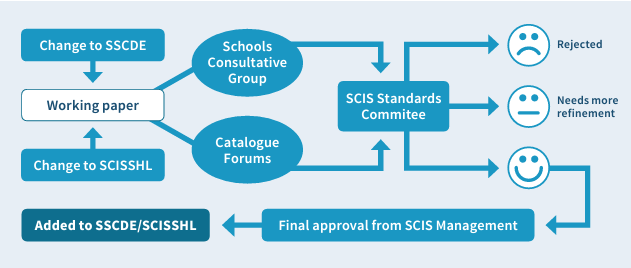
The lifecycle of a new heading begins with an idea. Suggestions for new headings can come from teachers or librarians in schools, from changes in the curriculum or from cataloguers. They can be prompted by technological change, social change or changes in accepted terminology or language. 

Once a new heading is proposed, the first step is to write a working paper. This starts with a detailed rationale for the new or changed heading. We count the number of records in the SCIS database that use the term to determine how common it is and provide a dictionary definition for clarity. 

The structure of the new heading is laid out: ‘Broader terms’ and ‘Narrower terms’ are identified and ‘Use for’ references are indicated, where appropriate. The heading may also include a clarifying scope note. 

The working paper will then detail the existing reference structure in the SCIS thesaurus and determine how the new term would be integrated. 

The completed working paper then starts its rounds of consultation. Papers are discussed at SCIS cataloguer meetings in Victoria and New South Wales. Once any suggested changes have been made, the papers are discussed at meetings of external cataloguers who contribute to the SCIS database. Papers are also assessed by a group of school librarians and teachers. 

When all stakeholders have been consulted, the opinions of each group are collated and presented at a quarterly meeting of the SCIS Standards Committee, made up of representatives from each team that contributes to SCIS. Each paper is presented and discussed in detail, and then voted on for inclusion in the database. If the paper is accepted, the new term will be added. If the paper is rejected, it may be revised and presented again at a later date, or rejected as unnecessary. Papers may go through several iterations before the new heading is finally accepted for inclusion. 

Example of a new SCIS subject heading 

Key 

  • BT – Broader term 
  • NT – Narrower term 
  • RT – Related term 
  • UF – Use for 
  • SN – Scope note 
  • SEN – Special example note 
  • In – Indexing note 

Heading 

Sleepovers 

SN Use for works about school-age or younger children sleeping over at another person’s home. 

  • UF Sleep overs 
  • UF Sleep-overs 
  • UF Slumber parties 
  • BT Sleep 
  • RT Bedtime 
  • RT Amusements 
  • RT Children’s parties 

Find out about new subject headings recently added to SCIS:

Read More


Unlock the World of Interactive Fiction: Discover 35 Free Titles on SCIS!

In the immersive world of interactive fiction, players command the story by inputting text to guide characters and explore rich narrative landscapes. Dubbed text adventures, these non-linear tales allow you to carve your own path through intricate choose-your-own-adventure stories online.

Excitingly, SCIS cataloguers have meticulously created records for 35 free interactive fiction titles, complete with URLs for direct, seamless access to these resources straight from your library catalogue.

Free Interactive Fiction Titles

SCIS NUMBER TITLE
5473019 Lost Pig
5473026 Suveh Nux
5473033 Inside the Facility
5473370 To Hell in a Hamper
5473371 The Wand
5473514 The Shadow in the Cathedral
5473381 Six
5473382 Aotearoa
5473385 Illuminismo Iniziato
5473386 Risorgimiento Represso
5473390 The Temple of Shorgil
5473539 Grandma Bethlinda’s Variety Box
5473538 Skies Above
5473541 A Bear’s Night Out
5473543 Winter Wonderland
5473392 Ether
5473520 Snack Time!
5473524 Best Gopher Ever
5473396 Untold Riches
5473401 Earth and Sky
5473402 Another earth, another sky
5473550 Pirate’s Plunder!
5473556 Mrs. Pepper’s Nasty Secret
5473574 The Prongleman Job
5473576 The Legend of the Missing Hat
5473579 The Blue Lettuce
5473403 The Lost Islands of Alabaz
5473585 It
5473642 Reflections
5473644 Baking with Lizzie
5473494 Dragon Adventure
5473646 And a Hippo New Year
5473649 Grandpa’s Ranch
5473495 A matter of Heist Urgency
5473496 Bureaucrocy

How to batch import the records into your library system

  1. Log into https://www.scisdata.com/
  2. Navigate to Downloads – Collections
  3. On the left you will see the categories of digital collections curated by SCIS
  4. Click on a category e-Books (free) click Download
  5. A list of the records in the list appears for you to evaluate suitability:
  • Clicking on the SCIS number opens the SCIS record
  • Clicking on the title will opens the digital resources
  1. Select resources to be removed from the download list by ticking the square box(es)
  2. Click Remove selected # records for any resources not relevant to your school community
  3. When you are happy with these records to be added to your catalogue click Download records
  4. You will have a new file in your computers download files with file extension .mrc
  5. Go to your LMS and use the file import process to import the records into your LMS (contact you LMS vendor with assistance with this step).

Download today

More reading about Interactive fiction:

We’re eager to gather feedback on how interactive fiction has impacted students in schools. Your insights are crucial for SCIS as we contemplate the future of this project and consider adding more titles. Email your feedback to help@scisdata.com.

Fostering Respect in Australian Schools through SCIS Authority Files

In today’s educational landscape, nurturing inclusivity in schools is of increasing importance. At SCIS, we’re deeply committed to fostering diversity and respect within the educational community, and we have recently taken a significant step in this direction by enhancing SCIS Authority Files.

We have now integrated AustLang terms into SCIS Authority Files. AustLang is an extensive Aboriginal and Torres Strait Islander language database that utilises the Australian Institute of Aboriginal and Torres Strait Islander Studies (AIATSIS) catalogue of language terms.

SCIS Authority Files play a central role in supporting learning and exploration through library catalogue searches, providing ‘see’ and ‘see also’ results to help users find the information they need.

Why is this development so crucial? The inclusion of AustLang terms means that school communities will see search results categorised by terms that appropriately name Australian languages, helping them understand how to respectfully refer to the resources they are looking for.

For educators, it offers a valuable resource, in line with the Australian Curriculum v.9, to help teach the importance of cultural diversity and respect to their students. It also encourages teachers to incorporate Aboriginal and Torres Strait Islander terms in their teaching, embedding a deeper understanding of Australia’s diverse culture into education.

Over 5000 schools across Australia use SCIS Authority Files. AustLang headings are now available to subscribing schools through our September Authority Files release. This update can be downloaded via our website, or automatically imported through our API for Accessit, Oliver and Athenaeum users.

If you don’t currently subscribe to SCIS Authority Files, you can contact our friendly customer service team at help@scisdata.com for more information. You can also sign up for our FREE March 2024 webinar to find out more about what SCIS Authority Files are, and how they can benefit your school library:

Sign Up Today

American Library Association Annual Conference 2023: Creating Connections in Chicago

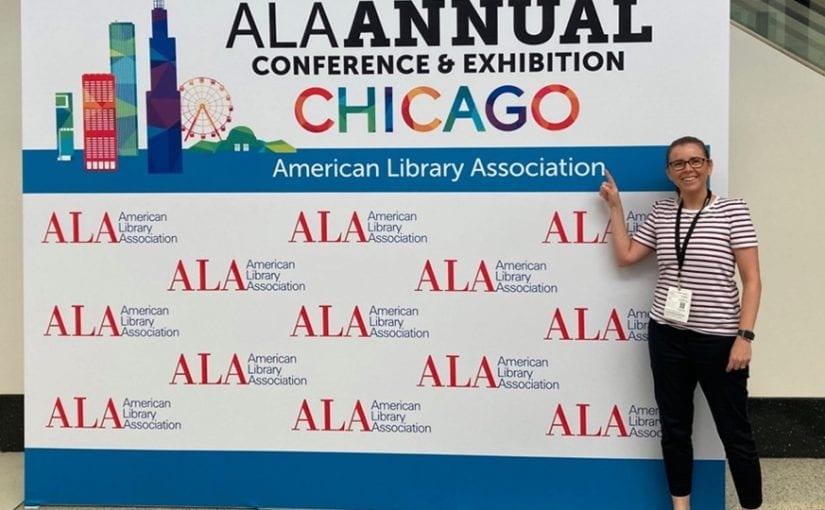
As a teacher librarian in a diverse school community, I am acutely aware that my worldview has been shaped by my upbringing in country South Australia. In June 2023, I had the opportunity to further my worldview by attending and presenting at the American Library Association Annual Conference in Chicago. The experience of meeting with 20,000 librarians from across the world was humbling. As we discussed our joys and challenges, there were many similarities. I felt while I was geographically outside my comfort zone, I was professionally in a familiar place.

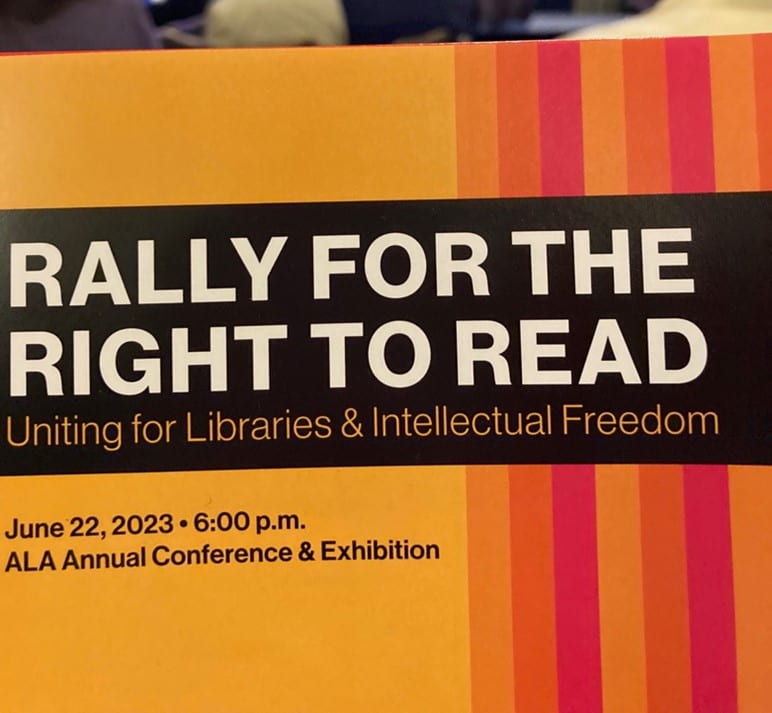
A sign advertising the ‘Rally for the right to read’.

One of the most interesting parts of my trip was my exposure to the book challenges and bans currently being experienced in schools and public libraries across the United States. On my first night in Chicago, I attended ‘A Rally for the Right to Read’. The title was not hyperbole; the right to read freely and widely in much of the US is at risk. The keynote was delivered by Dr Ibram X Kendi, Professor in Humanities at Boston University and the author of How to be an Antiracist, one of the most banned texts in school districts in 2021–22. However, this was not the most transformative moment for me – this moment came when a panel of school librarians and a rural mum/graduate student spoke. Jamie Gregory was the 2022 South Carolina School Librarian of the Year, an accolade which in turn brought undue attention to a simple tweet in support of a book, which then led to a tirade of online and offline abuse.

Becky Calzada is the District Library Coordinator in Leander ISD; her district was one of the first to experience the full brunt of book challenges, a title she is not proud of. She has taken it upon herself to guide others and even spoke to this little Australian, delivering valuable advice. In her words, ‘It starts with one book!’ and ‘Don’t give them to airtime they desire.’ The final panel member was Leila Green Little, a rural mum and graduate student in library studies who, along with six friends, have become plaintiffs in a federal lawsuit against her county, which has resulted in a preliminary injunction requiring the return of books to the shelves of the public library. The case is ongoing, as is the fight against book bans.

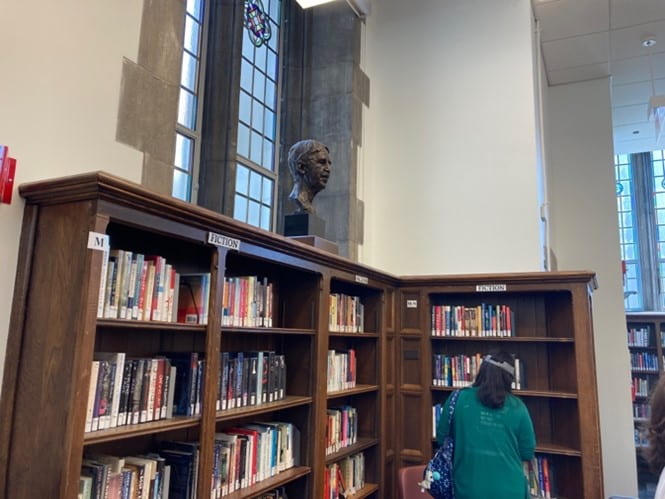
Senior Library at the University of Chicago Lab School

The following day I joined a Chicago School Library Tour with school librarians from the US, Singapore, Kenya and Peru. We visited school libraries serving different communities, with various designs and programs, but one quality was similar: the passion of the staff that work within them. At University of Chicago Lab School, one of the most interesting parts was exploring the Senior Library, replete with old wooden shelves and stained-glass windows. There was even a room dedicated to books published by graduates of the school. In contrast, the Catherine Cook School was a vertical school built in an old shoe factory. The furniture and programs were modern, the playground was on the roof, but the staff had the same dedication to literacy we share as professionals across the world. We finished the day with a keynote message from Judy Blume who, in keeping with what seems to be an ongoing theme, has over the years also had her books banned. She delighted the audience with a passion for ensuring teenagers access books which represent real problems.

After the joy of observing the practice of others, the next morning it was my turn to share. I presented on ‘Finding a New Normal: Library Policies and Practices’, sharing the pivots we took as a school library during the pandemic and the enduring legacy of these changes. I shared that many opportunities had opened up for invigorated programs and practices, but the pandemic also unearthed inequities within our services. No longer will we assume equal access to books and online resources in the homes of our students.

I spent the rest of the conference attending presentations and workshops on topics as diverse as supporting social development with literature, cataloguing, digital literacy and community connections.

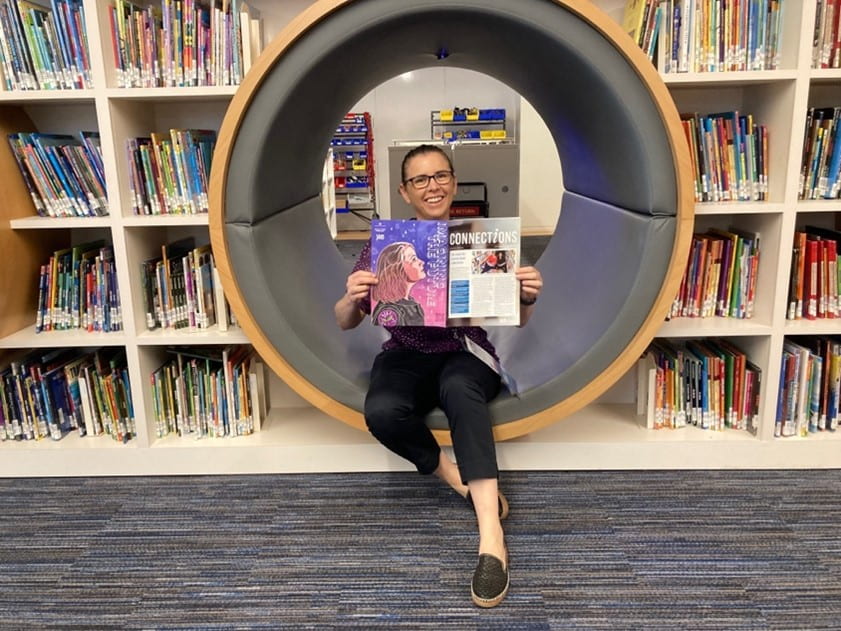
Catherine sharing SCIS’s Connections magazine at Francis W Parker School in Chicago

There were many highlights of my trip, presentations on the breadth of library topics, meeting the Librarian of Congress, Rick Riordan, and even visiting the Field Museum. I left the conference and the country with a suitcase full of new release books from publishers, along with a box mailed home, but also a toolbox of knowledge and experiences I can draw upon for my career. If you ever have the opportunity to attend an international conference, I encourage you to seize it. Our practice is not a solo act – we are better when we draw on the knowledge and experiences of others, and a global worldview can only enrich this further.


Subscribe By Email

Get every new post delivered right to your inbox.

This form is protected by reCAPTCHA and the Google Privacy Policy and Terms of Service apply.